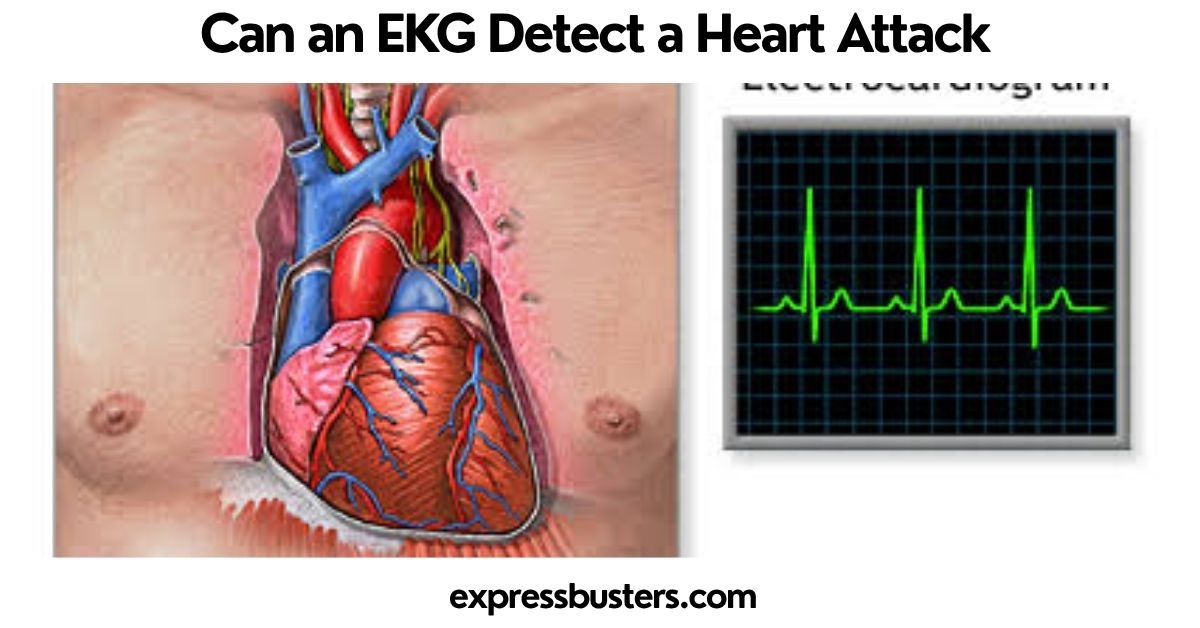
Can an EKG Detect a Heart Attack? Complete Guide to What an EKG Can and Cannot Reveal
When someone experiences chest pain, shortness of breath, dizziness, or discomfort in the upper body, one of the first tests doctors often perform is an electrocardiogram, commonly called an EKG or ECG. This test is fast, painless, and widely available in hospitals, emergency rooms, clinics, and ambulances.
A common question many people ask is: can an EKG detect a heart attack?
The short answer is yes, an EKG can often detect a heart attack. However, the full answer is more complex. While an EKG is one of the most important tools doctors use to identify heart attacks, it does not detect every heart attack, and sometimes additional tests are necessary to confirm a diagnosis.
Understanding how EKGs work, what they show, and their limitations can help you make informed decisions about your heart health. This guide explains everything you need to know about whether an EKG can detect a heart attack, including current attacks, previous heart attacks, and future heart attack risks.
What Is an EKG?
An electrocardiogram (EKG or ECG) is a medical test that records the electrical activity of your heart.
Every heartbeat is controlled by electrical signals that travel through the heart muscle. An EKG captures these signals through small sensors called electrodes placed on the skin.
The test creates a visual graph showing how electricity moves through the heart. Doctors analyze this graph to identify abnormalities that may indicate heart disease, rhythm problems, or a heart attack.
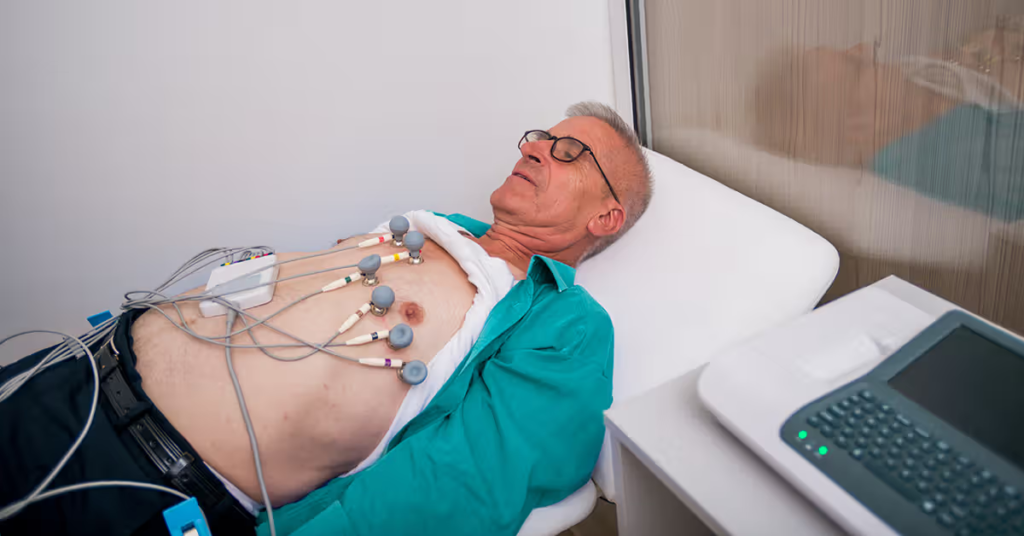
An EKG typically takes only a few minutes and provides immediate results, making it one of the fastest diagnostic tools available for cardiac emergencies.
How Does an EKG Work?
The heart functions as a powerful pump. Electrical impulses coordinate the contraction and relaxation of the heart muscle.
When an EKG is performed:
- Electrodes are attached to the chest, arms, and legs.
- The electrodes detect electrical signals generated by the heart.
- A machine records these signals.
- The results appear as waves on a graph.
Doctors examine these wave patterns for signs that the heart muscle is not receiving enough oxygen-rich blood.
When a heart attack occurs, blood flow to part of the heart becomes blocked. This can change the heart’s electrical activity, which may appear on an EKG.
Can an EKG Detect a Heart Attack?
Yes, an EKG can detect a heart attack in many cases.
In fact, it is one of the first tests used when a heart attack is suspected. Certain changes on an EKG can strongly suggest that a heart attack is occurring.
Common EKG findings associated with a heart attack include:
- ST-segment elevation
- ST-segment depression
- T-wave inversions
- Abnormal Q waves
- New conduction abnormalities
These patterns help doctors determine:
- Whether a heart attack is happening
- Which part of the heart is affected
- How severe the damage may be
- Whether emergency treatment is needed immediately
However, not all heart attacks create obvious EKG changes. Some people may have a normal or nearly normal EKG despite experiencing a heart attack.
This is why doctors often combine EKG results with blood tests, symptoms, medical history, and imaging studies.
Why Is an EKG So Important During a Suspected Heart Attack?
Time is critical during a heart attack.
The longer a blocked artery remains untreated, the greater the damage to the heart muscle.
An EKG provides rapid information that helps healthcare providers:
- Confirm a possible heart attack
- Decide on emergency treatment
- Identify life-threatening complications
- Monitor changes in heart function
Emergency guidelines recommend obtaining an EKG within 10 minutes of a patient arriving at the emergency department with symptoms suggestive of a heart attack.
This quick evaluation can save lives by speeding up treatment.
What Types of Heart Attacks Can an EKG Detect?
Heart attacks are not all the same.
Different types of heart attacks may produce different EKG findings.
STEMI Heart Attack
A STEMI (ST-Elevation Myocardial Infarction) is one of the most serious forms of heart attack.
In a STEMI, a coronary artery is completely blocked.
An EKG often shows a distinctive pattern called ST-segment elevation.
Because the EKG findings are usually clear, doctors can quickly identify STEMI patients and begin emergency treatment.
NSTEMI Heart Attack
An NSTEMI (Non-ST-Elevation Myocardial Infarction) occurs when blood flow is reduced but not completely blocked.
EKG changes may be subtle or even absent.
In these cases, blood tests measuring cardiac troponin levels become especially important.
NSTEMIs can still cause serious heart damage and require immediate medical attention.
Silent Heart Attack
Some heart attacks occur with mild symptoms or no symptoms at all.
These are known as silent heart attacks.
An EKG may later reveal evidence that a silent heart attack occurred, even if the person never realized it happened.
Can an EKG Miss a Heart Attack?
Yes, an EKG can miss a heart attack.
This is one of the most important facts people should understand.
A normal EKG does not automatically rule out a heart attack.
Several factors explain why:
Early Stages of a Heart Attack
Changes may not appear immediately after symptoms begin.
The EKG may look normal during the earliest stages.
Small Areas of Damage
Tiny heart attacks may not create obvious electrical abnormalities.
Location of the Heart Attack
Some regions of the heart are more difficult to evaluate using standard EKG leads.
Intermittent Problems
If blood flow is temporarily restored, EKG abnormalities may disappear.
Because of these limitations, doctors frequently repeat EKGs over time when heart attack symptoms persist.
Can an EKG Detect a Previous Heart Attack?
Many people wonder: can an EKG detect a previous heart attack?
The answer is often yes.
A previous heart attack can leave permanent changes in the heart muscle.
These changes may create characteristic patterns on an EKG, particularly abnormal Q waves.
When doctors identify these patterns, they may suspect that a person experienced a heart attack in the past.
However, EKG findings alone cannot always determine exactly when the heart attack occurred.
Additional testing may be necessary to confirm the diagnosis.
Can an EKG Detect a Past Heart Attack?
Another common question is: can an EKG detect a past heart attack?
In many cases, yes.
After a heart attack, scar tissue may replace damaged heart muscle.
Scar tissue affects how electrical impulses move through the heart.
This altered electrical activity may remain visible on an EKG for years.
However, not every past heart attack leaves a detectable signature.
Some individuals who had mild heart attacks may have normal EKGs later in life.
For this reason, doctors may recommend imaging tests such as:
- Echocardiograms
- Cardiac MRI
- Nuclear stress tests
- Cardiac CT scans
These tests can provide additional evidence of previous heart damage.
How Far Back Can an EKG Detect a Heart Attack?
A frequently asked question is: how far back can an EKG detect a heart attack?
There is no exact time limit.
If a heart attack caused permanent scarring, EKG abnormalities may remain visible indefinitely.
In some individuals, EKG changes can still be detected decades after the event.
However, several factors influence detectability:
- Severity of the heart attack
- Location of damage
- Amount of scar tissue formed
- Individual heart characteristics
Some old heart attacks leave strong electrical signatures, while others leave little evidence.
Therefore, an EKG may suggest that a heart attack occurred in the past but usually cannot determine the precise date.
ALso Read: How Do You Prevent a Heart Attack? A Complete Guide to Protecting Your Heart and Living Longer
Can an EKG Predict a Future Heart Attack?
Many people ask: can an EKG detect a future heart attack?
The answer is generally no.
An EKG is designed to assess the heart’s current electrical activity.
It cannot directly predict whether a future heart attack will occur.
However, an EKG can identify abnormalities that may indicate increased cardiovascular risk.
Examples include:
- Arrhythmias
- Evidence of previous heart damage
- Enlarged heart chambers
- Poor blood flow patterns
- Conduction disorders
These findings may suggest that a person has underlying heart disease and could face a higher risk of future cardiac events.
Still, no EKG can accurately predict the exact timing of a future heart attack.
What Other Tests Are Used Alongside an EKG?
Because an EKG has limitations, doctors rarely rely on it alone.
Several additional tests help confirm or rule out a heart attack.
Cardiac Troponin Blood Test
Troponin is a protein released when heart muscle cells are damaged.
Elevated troponin levels strongly suggest a heart attack.
Today, high-sensitivity troponin testing is one of the most accurate methods for diagnosing heart attacks.
Echocardiogram
An echocardiogram uses ultrasound waves to create images of the heart.
It can show areas of weakened heart muscle caused by a heart attack.
Coronary Angiography
This procedure allows doctors to visualize blocked arteries directly.
It is often used when a heart attack is strongly suspected.
Cardiac CT Scan
CT imaging can evaluate coronary arteries and identify plaque buildup.
Stress Testing
Stress tests assess how the heart functions during physical activity or medication-induced stress.
These tests may uncover hidden coronary artery disease.
Signs of a Heart Attack You Should Never Ignore
Even if an EKG appears normal, certain symptoms require immediate medical attention.
Warning signs include:
- Chest pressure
- Chest pain
- Shortness of breath
- Pain in the arm
- Jaw pain
- Neck pain
- Back pain
- Excessive sweating
- Nausea
- Dizziness
- Sudden fatigue
Women, older adults, and people with diabetes may experience less typical symptoms.
Never ignore symptoms simply because an initial EKG was normal.
Who Should Get an EKG?
Doctors may recommend an EKG for:
- Chest pain evaluation
- Heart attack symptoms
- Irregular heartbeats
- High blood pressure
- Heart disease monitoring
- Preoperative assessments
- Family history of heart disease
Routine EKGs may also be used during annual physical examinations in selected patients.
Understanding EKG Accuracy
An EKG is highly valuable, but no test is perfect.
Accuracy depends on several factors:
- Timing of the test
- Quality of the recording
- Experience of the interpreter
- Type of heart attack
- Individual anatomy
Studies have shown that some heart attacks produce classic EKG changes, while others require repeated testing and additional evaluation.
This is why healthcare providers assess the entire clinical picture rather than relying on one test result.
The Evolution of Heart Attack Detection
Modern heart attack diagnosis has improved dramatically over the last decade.
Today’s physicians use a combination of:
- Advanced EKG technology
- High-sensitivity troponin testing
- Cardiac imaging
- Artificial intelligence-assisted analysis
- Continuous cardiac monitoring
These innovations help identify heart attacks earlier and more accurately than ever before.
AI-enhanced EKG interpretation is becoming increasingly common and may improve the detection of subtle abnormalities that humans might overlook.
However, human expertise remains essential for accurate diagnosis and treatment decisions.
Common Myths About EKGs and Heart Attacks
Myth 1: A Normal EKG Means No Heart Attack
This is false.
Some heart attacks occur despite a normal EKG.
Myth 2: EKGs Detect Every Heart Problem
Not all heart conditions produce EKG abnormalities.
Additional testing may still be necessary.
Myth 3: EKG Changes Always Mean a Heart Attack
Certain EKG abnormalities can result from other conditions, including electrolyte imbalances and inflammation.
Myth 4: One EKG Is Always Enough
Doctors often repeat EKGs because heart attack-related changes can develop over time.
Also Read: How Do Heart Attacks Happen? A Complete Guide to Causes, Symptoms, Prevention, and Survival
Expert Insight: What Most People Misunderstand About EKGs
One of the biggest misunderstandings is viewing the EKG as a simple yes-or-no test.
In reality, an EKG is a piece of a larger diagnostic puzzle.
Think of the EKG as a snapshot of your heart’s electrical activity at a specific moment.
If the heart attack process is evolving, the snapshot may not capture the full picture.
This is why emergency physicians often combine serial EKGs, blood work, symptom assessment, and imaging studies.
The most accurate diagnosis comes from integrating all available information rather than relying on a single test.
Final Thoughts
So, can an EKG detect a heart attack?
Yes, an EKG is one of the most important tools for identifying a heart attack and guiding emergency treatment. It can often detect active heart attacks, reveal evidence of previous heart attacks, and uncover abnormalities linked to heart disease.
However, an EKG is not perfect. Some heart attacks may not appear on an initial EKG, especially during the early stages or in cases involving smaller areas of damage.
Can an EKG detect a previous heart attack? Often yes.
Can an EKG detect a past heart attack? Frequently yes, particularly if scar tissue remains.
How far back can an EKG detect a heart attack? Sometimes many years or even decades if permanent electrical changes are present.
Can an EKG detect a future heart attack? No, but it may reveal risk factors that suggest increased cardiovascular risk.
If you experience symptoms that could indicate a heart attack, seek immediate medical care regardless of what an EKG shows. Rapid evaluation and treatment remain the most effective ways to protect heart health and save lives.
Frequently Asked Questions
Can an EKG detect blocked arteries?
Not directly. An EKG may show signs suggesting reduced blood flow, but it cannot visualize blocked arteries. Imaging tests such as coronary angiography are needed for direct evaluation.
Can anxiety cause abnormal EKG results?
Yes. Anxiety can increase heart rate and create temporary changes that may affect EKG readings. Doctors consider symptoms and additional tests before making a diagnosis.
How long does an EKG take?
Most EKG tests take between 5 and 10 minutes from start to finish.
Is an EKG painful?
No. An EKG is completely painless. The electrodes simply rest on the skin and record electrical activity.
Can a smartwatch detect a heart attack?
Smartwatches may identify abnormal heart rhythms but cannot reliably diagnose a heart attack. Emergency medical evaluation is necessary if symptoms occur.
Can dehydration affect an EKG?
Yes. Severe dehydration can influence heart rhythm and may cause temporary EKG changes.
Can young adults have heart attacks that appear on an EKG?
Yes. Although less common, heart attacks can occur in younger adults, and EKGs may help identify them.
Should I get a second EKG if symptoms continue?
Yes. If symptoms persist, doctors often repeat EKG testing because heart attack-related changes can evolve over time.
Can medications affect EKG results?
Certain medications can alter heart rhythm and electrical conduction, which may appear on an EKG.
Can an EKG be normal after a heart attack?
Yes. Some individuals, especially those with smaller heart attacks, may later have normal EKG findings despite previous heart damage. Additional testing may be required to identify past cardiac events.