What Level of Troponin Indicates Heart Attack? Complete Guide to Troponin Levels, Diagnosis, and What the Numbers Mean
If you or someone you love has recently undergone blood testing for chest pain, one of the most important questions you may have is: what level of troponin indicates heart attack?
Troponin is one of the most trusted biomarkers doctors use to determine whether heart muscle damage has occurred. When the heart is injured, troponin leaks into the bloodstream. Measuring troponin levels helps healthcare professionals identify heart attacks quickly and accurately.
However, many people are surprised to learn that there is no single troponin number that automatically means a heart attack. Troponin results must be interpreted alongside symptoms, medical history, electrocardiogram (ECG) findings, and changes in blood levels over time.
In this comprehensive guide, we will explain what level of troponin indicates heart attack, how high-sensitivity troponin tests work, what normal and abnormal levels mean, and when elevated troponin levels may signal other health conditions.
By the end of this article, you will understand exactly how doctors use troponin testing and what your results may mean.
What Is Troponin?
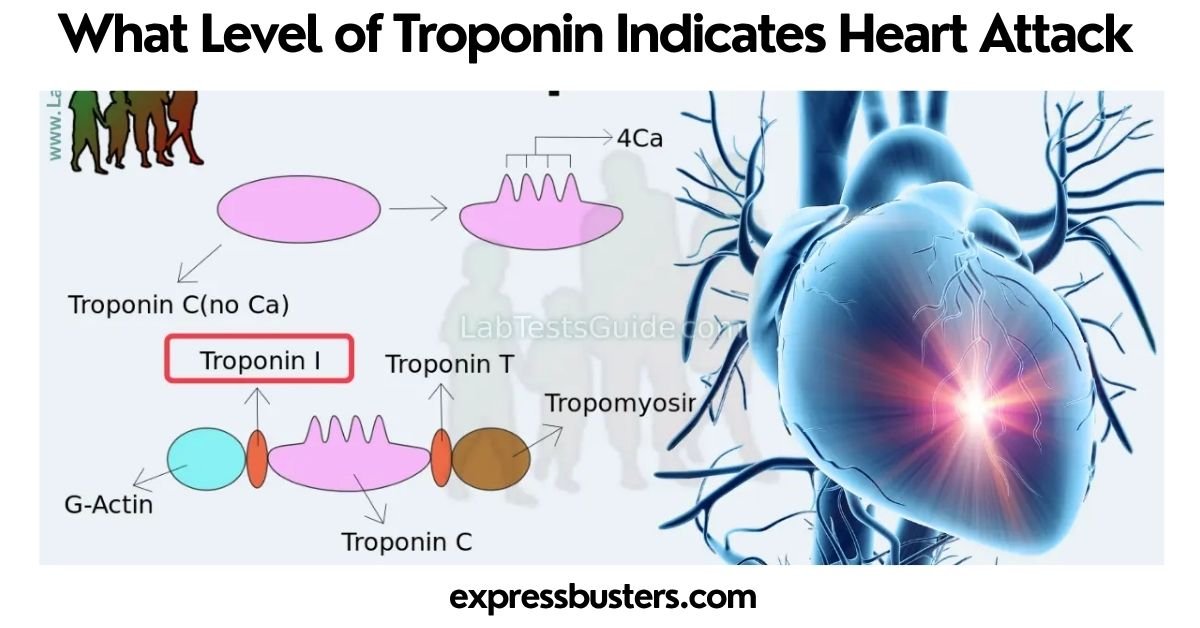
Troponin is a protein found inside heart muscle cells. Its primary job is to help regulate muscle contraction.
There are three main types of troponin:
- Troponin C
- Troponin I
- Troponin T
When doctors evaluate heart damage, they usually measure:
- Troponin I (cTnI)
- Troponin T (cTnT)
Under normal circumstances, very little troponin circulates in the blood. However, when heart muscle cells become damaged or die, troponin is released into the bloodstream.
Because of this, troponin is considered the gold standard blood marker for diagnosing heart attacks.
What Level of Troponin Indicates Heart Attack?
The answer to what level of troponin indicates heart attack depends on the specific test being used.
Modern hospitals typically use high-sensitivity troponin tests, which can detect even tiny amounts of heart muscle injury.
In general:
- A troponin level above the 99th percentile upper reference limit is considered abnormal.
- A rising and falling pattern strongly suggests acute heart damage.
- Elevated troponin combined with symptoms such as chest pain may indicate a heart attack.
Most laboratories consider values above approximately:
- Troponin I: Greater than 0.04 ng/mL may be abnormal
- High-sensitivity Troponin T: Greater than 14 ng/L is often considered elevated
However, reference ranges vary by laboratory and testing method.
Doctors do not diagnose a heart attack based solely on one elevated troponin value. They also look for:
- Chest pain
- Shortness of breath
- ECG changes
- Imaging findings
- Dynamic increases or decreases in troponin levels
This combination helps determine whether the elevation truly represents a heart attack.
Understanding Normal Troponin Levels
To understand what level of troponin indicates heart attack, it helps to know what normal levels look like.
Most healthy individuals have very low troponin concentrations.
Typical ranges include:
Troponin I
- Less than 0.04 ng/mL is generally considered normal
High-Sensitivity Troponin T
- Less than 14 ng/L is often considered normal
High-Sensitivity Troponin I
- Normal limits vary by manufacturer and laboratory
Many healthy people have troponin levels so low they are barely detectable.
When levels rise above the established reference range, healthcare providers investigate the cause.
What Level of High Sensitivity Troponin Indicates Heart Attack?
One of the most common questions today is: what level of high sensitivity troponin indicates heart attack?
Also Read: How to Stop a Heart Attack: Complete Guide to Recognizing, Responding, and Reducing Your Risk
High-sensitivity troponin tests are much more accurate than older tests because they can detect tiny amounts of heart muscle injury.
These tests allow doctors to identify heart attacks earlier, often within a few hours of symptom onset.
Although cutoffs vary, many laboratories use:
- High-sensitivity troponin T above 14 ng/L
- High-sensitivity troponin I above the laboratory-specific threshold
However, a single elevated value is not always enough.
Doctors often perform repeat testing:
- At presentation
- After 1 hour
- After 2 hours
- After 3 hours
A significant rise or fall in levels provides stronger evidence of an acute heart attack.
For example:
A patient arrives with chest pain and a troponin level of 18 ng/L.
Two hours later, the level rises to 85 ng/L.
This significant increase strongly suggests active heart muscle damage.
What Level of Troponin I Indicates Heart Attack?
Many patients specifically ask: what level of troponin I indicates heart attack?
Troponin I is one of the most widely used cardiac biomarkers in hospitals across the United States.
Typical interpretation includes:
- Below 0.04 ng/mL: Usually normal
- 0.04–0.39 ng/mL: May require further evaluation
- Above 0.40 ng/mL: Often suggests significant heart injury
Again, context matters.
A patient with:
- Severe chest pain
- ECG abnormalities
- Rising troponin I levels
is much more likely to be experiencing a heart attack than someone with a stable elevated level and no symptoms.
Why Troponin Levels Rise During a Heart Attack
A heart attack occurs when blood flow to part of the heart becomes blocked.
Without oxygen-rich blood, heart muscle cells begin to die.
As these cells break down, troponin leaks into the bloodstream.
The process usually follows this timeline:
First Few Hours
Troponin begins to rise approximately 3 to 6 hours after injury.
Peak Levels
Troponin often peaks within 12 to 24 hours.
Extended Elevation
Levels may remain elevated for:
- 7 to 14 days
- Sometimes longer
This prolonged elevation allows doctors to diagnose heart attacks even when patients seek medical care several days after symptoms begin.
Can Troponin Be Elevated Without a Heart Attack?
Yes.
One of the biggest misconceptions is that every elevated troponin result means a heart attack.
Many medical conditions can increase troponin levels.
These include:
Heart Failure
Patients with heart failure often have chronic elevations.
Kidney Disease
Reduced kidney function can lead to persistently elevated troponin.
Myocarditis
Inflammation of the heart muscle may release troponin.
Pulmonary Embolism
A blood clot in the lungs can strain the heart.
Severe Infections
Sepsis can cause significant heart stress.
Stroke
Certain neurological emergencies may elevate troponin.
Uncontrolled High Blood Pressure
Severe hypertension can damage heart tissue.
Arrhythmias
Rapid or abnormal heart rhythms sometimes increase troponin levels.
This is why doctors never rely on troponin alone when diagnosing a heart attack.
How Doctors Confirm a Heart Attack
When evaluating possible heart attacks, healthcare providers use several tools together.
Patient Symptoms
Common symptoms include:
- Chest pain
- Pressure in the chest
- Arm pain
- Jaw pain
- Back pain
- Shortness of breath
- Nausea
- Sweating
Electrocardiogram (ECG)
The ECG records electrical activity in the heart.
Certain patterns strongly suggest a heart attack.
Troponin Testing
Blood tests reveal heart muscle injury.
Imaging Studies
Doctors may order:
- Echocardiograms
- Cardiac MRI
- Coronary angiography
Using multiple sources of information improves diagnostic accuracy.
How High Can Troponin Levels Get During a Heart Attack?
Troponin levels vary dramatically between patients.
Also Read: How to Avoid Heart Attack: The Protecting Your Heart Naturally
Some individuals experience mild elevations.
Others develop extremely high readings.
Examples may include:
- 50 ng/L
- 500 ng/L
- 5,000 ng/L
- Over 50,000 ng/L
Generally, larger heart attacks produce higher troponin levels.
However, the exact number does not always predict survival or long-term outcomes.
The trend over time and overall clinical picture remain most important.
What Level of Troponin Indicates Heart Attack UK?
Many people searching online ask: what level of troponin indicates heart attack UK?
The principles used in the United Kingdom are similar to those used in the United States.
The National Health Service (NHS) and cardiology guidelines typically rely on:
- High-sensitivity troponin testing
- Values above the 99th percentile
- Clinical symptoms
- ECG findings
- Serial blood tests
In many UK hospitals, high-sensitivity troponin T levels above approximately 14 ng/L are considered elevated.
However, diagnosis still requires a complete clinical assessment rather than a single number.
High-Sensitivity Troponin vs Traditional Troponin Tests
Modern medicine increasingly relies on high-sensitivity testing.
Traditional Troponin Tests
Older tests could miss very small amounts of damage.
Results often took longer to become abnormal.
High-Sensitivity Troponin Tests
Advantages include:
- Earlier detection
- Greater accuracy
- Faster diagnosis
- Better risk assessment
Many emergency departments now use high-sensitivity troponin as the standard approach.
Factors That Affect Troponin Results
Several factors may influence test results.
Age
Older adults may have slightly higher baseline levels.
Sex
Men and women may have different reference ranges.
Kidney Function
Chronic kidney disease often affects interpretation.
Existing Heart Disease
Previous heart damage can elevate troponin.
Physical Stress
Severe illness may increase levels even without blocked arteries.
Doctors account for these factors before making a diagnosis.
What Happens If Your Troponin Is Elevated?
An elevated troponin result usually triggers further evaluation.
Possible next steps include:
- Repeat blood tests
- Continuous heart monitoring
- ECG testing
- Echocardiography
- Cardiology consultation
- Coronary angiography
The treatment plan depends on the underlying cause.
Treatment When Troponin Indicates a Heart Attack
When a heart attack is confirmed, treatment aims to restore blood flow quickly.
Common treatments include:
Medications
Doctors may prescribe:
- Aspirin
- Blood thinners
- Statins
- Beta blockers
- Nitroglycerin
Coronary Angioplasty
A catheter is used to open blocked arteries.
Stent Placement
A small mesh tube helps keep the artery open.
Coronary Artery Bypass Surgery
Some patients require surgical treatment.
Prompt treatment significantly improves outcomes.
Can Troponin Predict Future Heart Problems?
Research shows elevated troponin levels may provide important information about future cardiovascular risk.
Even small increases may indicate:
- Higher risk of heart disease
- Increased likelihood of hospitalization
- Greater long-term cardiovascular risk
This is especially true among:
- Older adults
- People with diabetes
- Patients with kidney disease
- Individuals with known heart disease
Doctors often use troponin as both a diagnostic and prognostic tool.
When Should You Seek Emergency Medical Care?
Immediate medical attention is needed if you experience:
- Chest pain lasting more than a few minutes
- Sudden shortness of breath
- Pain spreading to the arm or jaw
- Severe sweating
- Unexplained nausea
- Dizziness or fainting
Never wait for symptoms to improve if a heart attack is possible.
Early treatment saves heart muscle and lives.
Common Myths About Troponin Levels
Any Elevated Troponin Means a Heart Attack
False.
Many conditions besides heart attacks can elevate troponin.
A Normal Troponin Completely Rules Out Heart Problems
False.
Testing too early may miss a developing heart attack.
Higher Troponin Always Means a Worse Outcome
Not necessarily.
Many factors influence prognosis.
Troponin Testing Replaces ECGs
False.
Troponin and ECG testing work together.
Also Read: Inomyalgia: Causes, Symptoms, Treatment, and Lifestyle Changes for Long-Term Relief
Key Takeaways
Understanding what level of troponin indicates heart attack can help patients better understand their medical care.
The most important points include:
- Troponin is the primary blood marker used to detect heart muscle damage.
- There is no single troponin value that automatically confirms a heart attack.
- High-sensitivity troponin tests have improved early diagnosis.
- Doctors evaluate symptoms, ECG findings, and troponin trends together.
- Elevated troponin does not always mean a heart attack.
- Conditions such as kidney disease, heart failure, and severe infections can also raise troponin levels.
- Prompt medical attention is essential when heart attack symptoms occur.
Ultimately, the pattern of troponin change over time is often more important than a single measurement.
Frequently Asked Questions (FAQs)
How quickly does troponin rise after a heart attack?
Troponin usually begins rising within 3 to 6 hours after heart muscle injury and may remain elevated for up to two weeks.
Can anxiety increase troponin levels?
Anxiety alone typically does not elevate troponin. However, severe stress-related conditions affecting the heart may cause increases.
Is a troponin level of 100 high?
Yes. In most laboratories, a troponin level of 100 ng/L would be considered significantly elevated and requires medical evaluation.
Can exercise raise troponin levels?
Intense endurance exercise, such as marathon running, may temporarily increase troponin levels in some individuals.
Can dehydration cause elevated troponin?
Dehydration alone usually does not cause significant elevations, but severe dehydration may contribute to heart strain in vulnerable individuals.
How many troponin tests are usually performed?
Most emergency departments perform at least two tests several hours apart to look for changes over time.
Does a previous heart attack affect troponin levels?
Some individuals may have persistently elevated troponin after previous heart damage, which can complicate interpretation.
Can troponin levels return to normal?
Yes. After a heart attack or other injury, troponin levels usually gradually return to baseline over days or weeks.
Is high-sensitivity troponin more accurate?
Yes. High-sensitivity troponin tests can detect smaller amounts of heart damage and help doctors diagnose heart attacks earlier.
Should I worry about a slightly elevated troponin level?
A slightly elevated result does not automatically mean a heart attack. Your doctor will consider symptoms, medical history, ECG findings, and repeat testing before making a diagnosis.
Conclusion
Understanding what level of troponin indicates heart attack is essential for anyone trying to make sense of cardiac blood test results. While elevated troponin levels are one of the strongest indicators of heart muscle damage, there is no single number that automatically confirms a heart attack. Doctors rely on a combination of troponin results, symptoms, ECG findings, medical history, and changes in troponin levels over time to make an accurate diagnosis.
Whether you are researching what level of troponin indicates a heart attack, what level of high sensitivity troponin indicates heart attack, what level of troponin I indicates heart attack, or what level of troponin indicates heart attack UK, the key takeaway is that interpretation requires a complete clinical evaluation. High-sensitivity troponin tests have greatly improved the ability to detect heart attacks earlier, allowing patients to receive faster treatment and better outcomes.
If you experience symptoms such as chest pain, shortness of breath, dizziness, or discomfort spreading to the arm, jaw, or back, seek immediate medical attention rather than trying to interpret troponin numbers on your own. Early diagnosis and treatment remain the most effective ways to reduce heart damage and improve long-term heart health. By understanding how troponin testing works, patients can have more informed conversations with healthcare providers and make better decisions about their cardiovascular care.